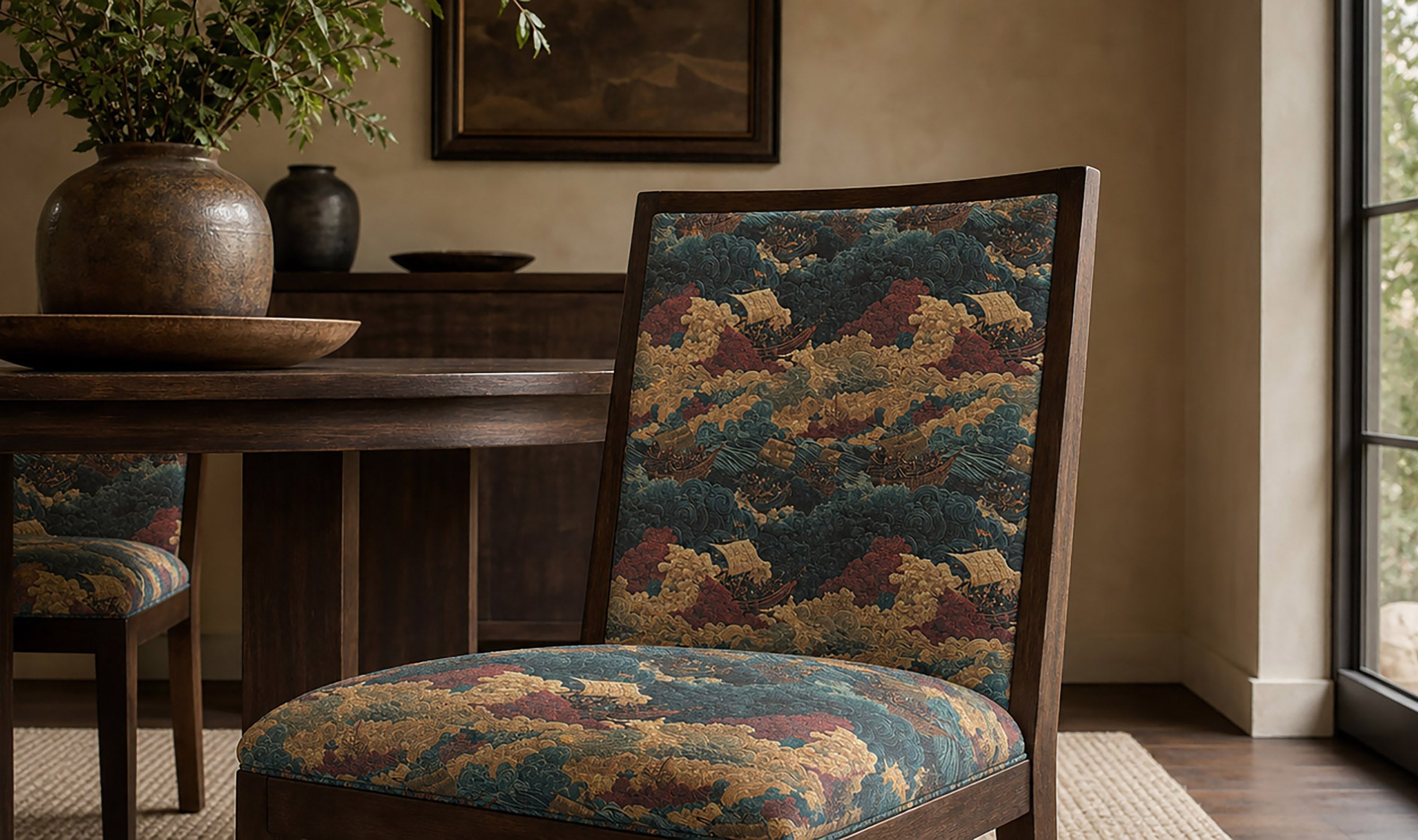

Soil and Stain Treatment for Upholstery Fabric
Soil and stain treatment for upholstery fabric is designed to make fabric more resistant to everyday spills, dirt and marks. It can be a very useful addition for dining chairs, family sofas, footstools, hospitality seating and pale or high-use fabrics, but it is important to understand what it does and what it does not do.
At Saint & Poet, specialist stain-resistant treatments are carried out externally by trusted professionals. Treated fabrics usually require a lead time of approximately 21 days, although we always try to reduce waiting times where possible.
Quick answer: what does soil and stain treatment do?
Soil and stain treatment adds a specialist protective finish to upholstery fabric to help improve resistance to spills, dirt and everyday marks. It gives you more time to respond to accidents and can help preserve the fabric's appearance, vibrancy and texture. It does not make fabric waterproof, stain-proof or impossible to mark.
What soil and stain treatment helps with
| Helps with | What that means in real life |
|---|---|
| Everyday spills | Liquid may be less likely to soak in immediately, giving you more time to blot. |
| General dirt and soil | The treatment can help fabric resist everyday surface marks from regular use. |
| Family seating | Useful for sofas, armchairs, dining chairs and footstools that see daily contact. |
| Paler colours | Can give extra confidence when choosing lighter or softer upholstery shades. |
| Hospitality and guest spaces | Helpful in high-use interiors where fabric needs to stay presentable for longer. |
What soil and stain treatment does not do
This is the most important part. Stain treatment is helpful, but it is not magic. It improves resistance; it does not remove the need for care, cleaning or sensible fabric choice.
| It does not | Why this matters |
|---|---|
| Make fabric fully stain-proof | Some spills, dyes, oils and strong substances can still mark fabric. |
| Make fabric waterproof | Treated upholstery fabric should not be treated like outdoor or waterproof fabric. |
| Prevent every mark | Heavy soiling, neglect, dye transfer and harsh substances may still leave marks. |
| Replace cleaning | Spills still need to be blotted quickly and cleaned according to care guidance. |
| Stop physical wear | It does not prevent abrasion, tears, pilling, crushing, sunlight fading or frame wear. |
| Make every colour equally practical | Pale plain fabric will usually still show marks more than darker or patterned fabric. |
Soil and stain treatment vs fabric durability
Soil and stain treatment is about resistance to spills, dirt and marks. Durability is about how well fabric handles rubbing, sitting, movement and abrasion. These are related, but they are not the same thing.
A fabric can have strong durability but still benefit from stain treatment. Saint & Poet upholstery fabrics are tested to 35,000+ rubs, which gives a strong practical base for chairs, sofas and commercial-style projects. Stain treatment can then add another layer of everyday protection for the right use case.
When is stain treatment worth choosing?
Stain-resistant treatment is most useful when the furniture will face regular use, food, drink, children, pets, guests or heavy contact. It is especially worth considering for dining chairs, kitchen seating, family sofas, footstools, ottomans, rental properties and boutique guest spaces.
It can also be a sensible choice for lighter fabrics. If you love a pale neutral, pink, cream or soft blue upholstery fabric, treatment can give added confidence. That said, a treated pale fabric may still show marks more easily than a darker patterned fabric, so colour and pattern choice still matter.
When might you not need it?
You may not need soil and stain treatment for low-use decorative pieces, occasional bedroom chairs or headboards in quiet rooms. It may still be worth choosing for peace of mind, but it is less essential where food, drink and daily contact are not part of the furniture's life.
The decision should depend on how the fabric will actually be used, not only how it looks in the room.
How to care for treated upholstery fabric
- Act quickly when a spill happens.
- Blot gently with a clean, dry, white cloth.
- Do not rub aggressively, as this can push liquid deeper or disturb the fabric surface.
- Avoid bleach, harsh chemicals and strong household cleaners unless specifically advised.
- Vacuum upholstery regularly using a suitable soft attachment.
- Follow care guidance and ask before using any professional cleaning method.
Even with treatment, prompt care matters. The sooner a spill is managed, the better the chance of limiting a mark.
Soil and stain treatment vs fire-retardant treatment
Soil and stain treatment is different from fire-retardant treatment. Stain treatment is about resistance to spills, dirt and everyday marking. Fire-retardant treatment is about meeting fire safety requirements for certain interiors, especially commercial and contract upholstery projects.
Saint & Poet can also offer dual-treated fabrics where suitable, combining fire resistance with stain repellency. Our fabric treatment page explains contract fire treatment, including BS5852 1990 Part 2 Section 4 Crib5 and BS 5651 30-minute soak test standards, alongside stain treatment options.
Does treatment change the fabric?
Because specialist treatments are applied externally, project-specific questions should be checked before ordering. If handle, finish, colour or compliance is critical to your project, ask before committing to metres. Samples are still important because treatment does not remove the need to check colour, texture and scale in your room.
How to order treated upholstery fabric
- Choose your fabric and order samples first.
- Check the colour, texture and pattern scale in the room.
- Confirm metreage with your upholsterer.
- Decide whether you need soil and stain treatment, fire-retardant treatment or both.
- Allow around 21 days for externally applied treatment.
- Order enough fabric for the full project, especially if pattern repeat or matching is involved.
Where to browse next
Read our fabric treatment page, browse luxury upholstery fabric by the metre, explore patterned upholstery fabric, and read our guide to cleaning and maintaining upholstery fabric.
FAQs
Is stain-resistant upholstery fabric stain-proof?
No. Stain-resistant treatment improves resistance, but it does not make upholstery fabric completely stain-proof.
Is treated upholstery fabric waterproof?
No. Soil and stain treatment does not make fabric waterproof. It is designed to help resist everyday spills and dirt, not to turn upholstery into outdoor or waterproof fabric.
How long does treated fabric take?
Saint & Poet treated fabrics usually require approximately 21 days because specialist treatments are carried out externally by trusted professionals.
Can stain treatment be combined with Crib5 fire treatment?
Yes, dual treatment may be available where suitable, combining contract fire-retardant treatment with stain repellency. Confirm requirements before ordering.
Should I choose treatment for dining chairs?
Often, yes. Dining chairs face food, drink, friction and regular use, so stain-resistant treatment can be a sensible choice.
Does treatment mean I can choose any pale fabric without worry?
Not entirely. Treatment helps, but pale plain fabrics usually still show marks more than darker, textured or patterned upholstery fabrics.