
What Is Contract Upholstery Fabric?
Contract upholstery fabric is upholstery fabric chosen for commercial, hospitality or public-facing interiors where ordinary appearance-led fabric information is not enough. A contract project usually needs durability, fire-performance clarity, cleaning guidance and, often, documentation for the designer, upholsterer, contractor or compliance lead.
The best contract upholstery fabric still needs to look right. Hotels, restaurants, bars, offices, guest houses and members clubs do not want furniture that feels purely functional. They need fabric that can support the specification and help create the atmosphere of the space.
For Saint & Poet, there are two useful routes to understand. Regular linen-look and woven upholstery fabrics can be treated where a project needs fire-retardant, Crib5 or soil and stain performance. Selected printed patterned velvets can use a Crib5-tested velvet basecloth, which may remove the need for a separate Crib5 treatment stage where that basecloth applies.

Quick answer: what is contract upholstery fabric?
Contract upholstery fabric is fabric specified for commercial or high-use interiors such as hotels, restaurants, bars, offices, guest spaces, reception areas and other public-facing seating. It is usually chosen for durability, rub count, fire-performance suitability, cleaning practicality and clear project documentation.
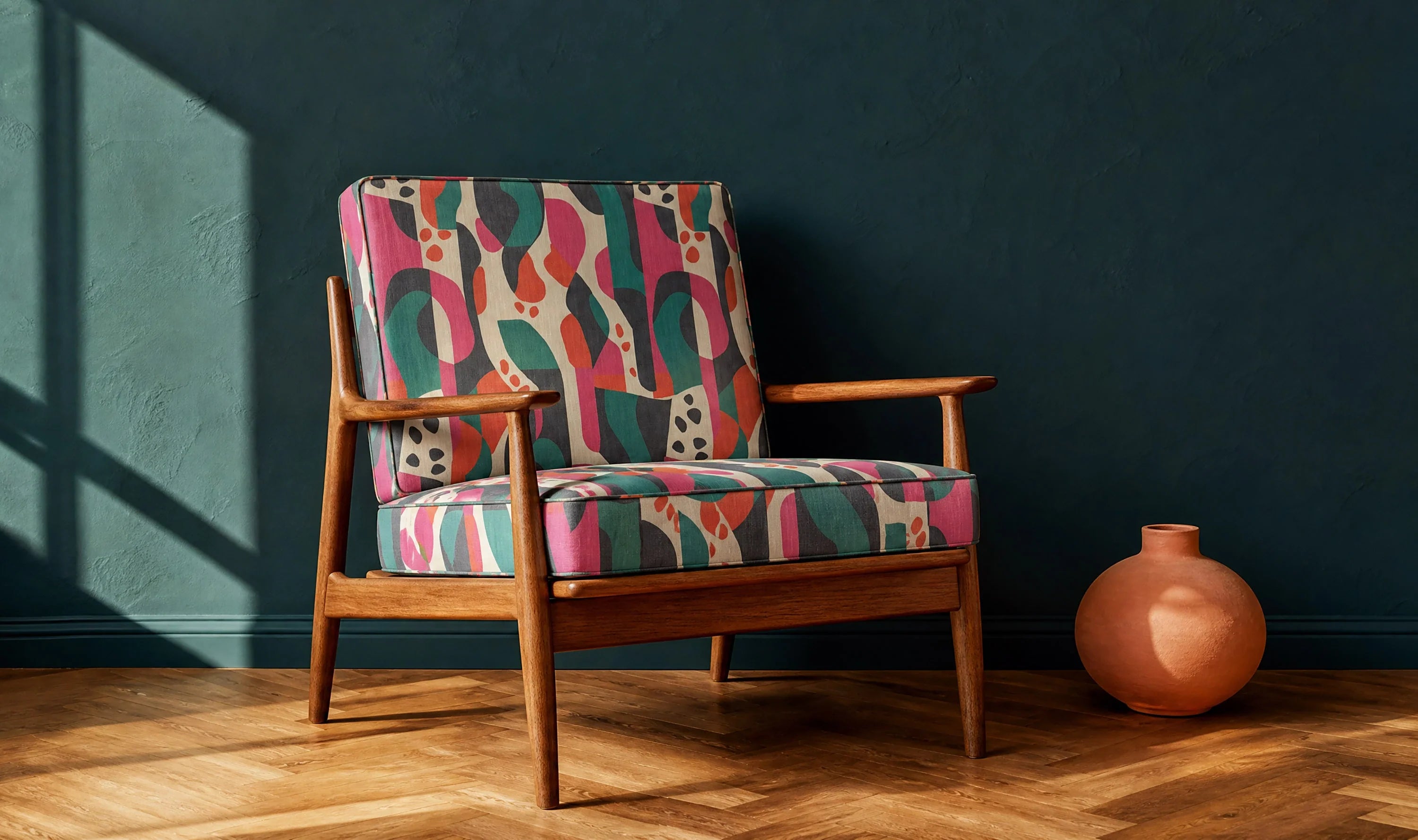
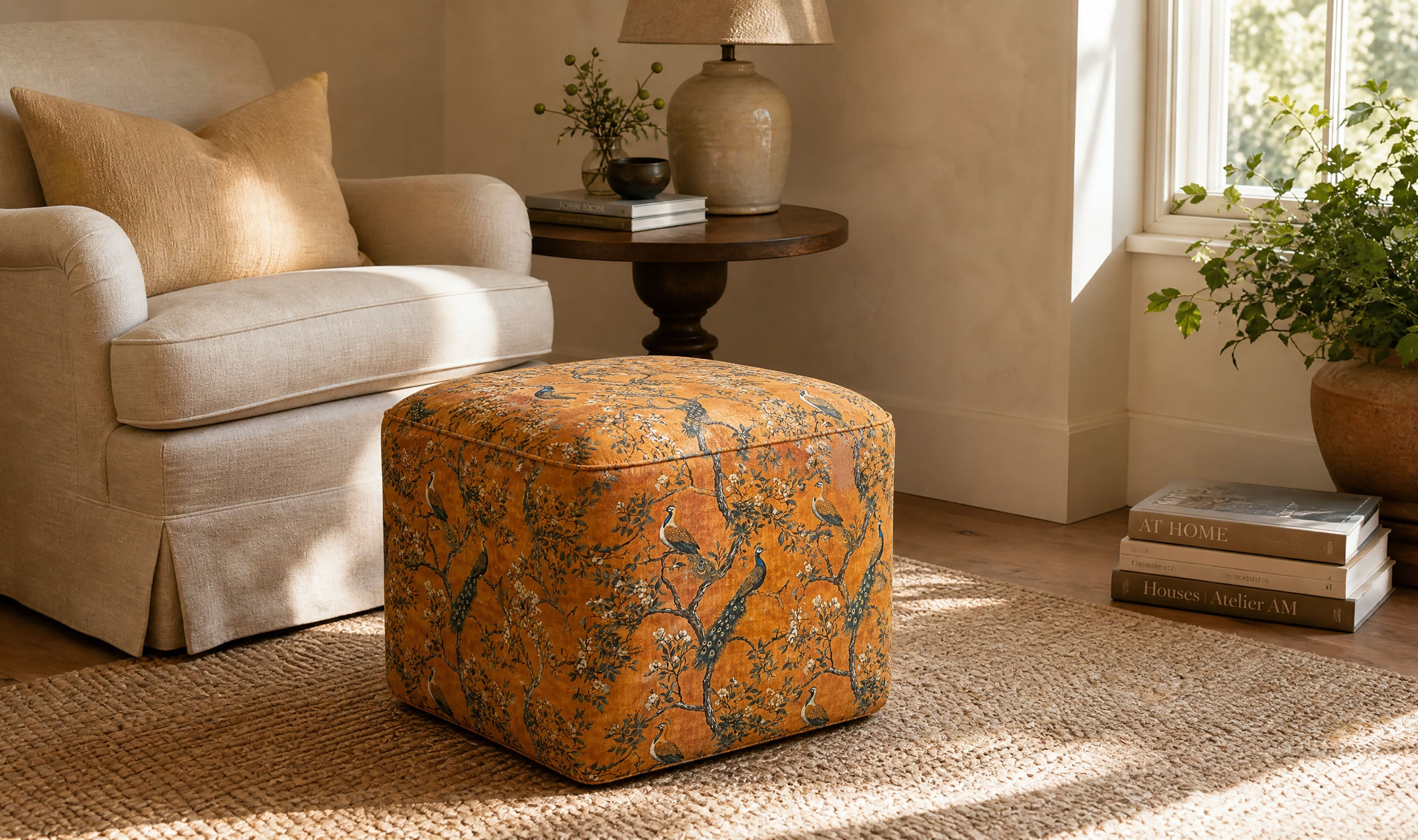
Contract fabric does not have to mean plain fabric. Patterned upholstery fabric, velvet, linen-look cloth, abstract designs, bird motifs, rich plains and textured fabrics can all be considered for contract interiors when the right performance route supports the project.
Contract upholstery fabric checklist
| Requirement | What to check | Why it matters |
|---|---|---|
| Durability | Rub count and upholstery suitability. | Commercial seating receives repeated daily use. |
| Fire performance | Whether the fabric needs Crib5 treatment or uses a tested basecloth. | Hospitality and public interiors often have fire-safety requirements. |
| Cleaning | Care profile and whether soil and stain treatment is useful. | Fabric needs to stay presentable between guest or customer use. |
| Documentation | Test evidence, treatment confirmation or project sign-off information. | Designers and contractors may need proof before approval. |
| Design | Colour, pattern, texture and brand fit. | Fabric contributes to the whole identity of the interior. |
Does contract upholstery fabric need Crib5?
Not always, but many hospitality and commercial projects ask for Crib5 or another fire-performance requirement. A restaurant chair, hotel bedroom chair, banquette, headboard or reception seat may each have different requirements depending on where and how the furniture is used.
The key is to check the project specification before ordering. If Crib5 is needed, the fabric may follow one of two routes: a treatment route, where the chosen upholstery fabric is treated to meet the requirement, or a tested-basecloth route, where the fabric is already produced on a basecloth with Source 5 test evidence.
Route one: treating regular linen-look upholstery fabrics
For regular linen-look, woven and many non-velvet upholstery fabrics, the contract route is often treatment-led. That means the fabric can be selected for its design, colour, handle and durability, then treated where the project requires additional fire-retardant or Crib5 performance.
This route is useful when a designer wants a specific linen-look fabric, plain upholstery fabric, abstract weave or patterned cloth for a hotel bedroom, guest chair, restaurant seat or commercial interior. Treatment should be discussed before the fabric is ordered and cut, because it can affect lead time, cost and project paperwork.
Soil and stain treatment is a separate decision. It does not make a fabric Crib5. Instead, it helps the fabric resist everyday marking from spills, dirt and use. For hospitality, regular linen-look upholstery fabrics may need both conversations: fire-performance treatment for compliance and stain treatment for day-to-day practicality.
Route two: selected printed velvets on a Crib5-tested basecloth
Selected Saint & Poet printed patterned velvet ranges can be produced on a Crib5-tested velvet basecloth. This is commercially important because the fire-performance evidence relates to the foundation of the velvet rather than relying only on an additional treatment after printing.
For contract and hospitality buyers, that can simplify the specification journey. A printed patterned velvet can offer colour, softness and strong design character while still having a clearer Source 5 evidence route for projects that require Crib5 information.
The IFS Laboratories test certificate supplied for the velvet basecloth records Shimmer Velvet Original, 100% polyester, upholstery end use, tested to BS 5852:2006 Clause 11 - S5, with an overall PASS. The certificate was tested on 25 June 2026 and issued on 30 June 2026.
This should still be used carefully. The report relates to the supplied sample and stated test conditions, and it does not automatically approve every fabric or every finished furniture item for every project. If your project needs documentation, ask before ordering so the exact fabric, basecloth and requirement can be checked.
Contract fabric vs domestic upholstery fabric
Domestic upholstery fabric is usually chosen for homes, where performance still matters but the legal and specification requirements are often different. Contract upholstery fabric is chosen for commercial settings where the fabric may face more frequent use, stricter fire requirements, cleaning routines and documentation requests.
That does not mean contract fabric is only for businesses. Domestic customers may choose contract-style fabric when they want strong durability, a more practical finish or a safer route for rented accommodation and high-use furniture. The difference is that contract projects usually need more questions answered before the fabric is approved.
Where contract upholstery fabric is used
- Hotel bedroom chairs, headboards and lounge seating.
- Restaurant dining chairs and banquettes.
- Bar stools, members club seating and booth seating.
- Office reception chairs, breakout areas and meeting spaces.
- Guest houses, serviced apartments and boutique accommodation.
- Retail seating, waiting areas and public-facing interiors.
What does 35,000+ rubs mean?
A rub count is a measure of abrasion resistance, often tested using the Martindale method. In simple terms, it helps show how well a fabric can withstand repeated friction before visible wear. For busy seating, a strong rub count is important because the fabric will be sat on, brushed against and cleaned repeatedly.
Saint & Poet upholstery fabrics are tested to 35,000+ rubs, which makes them a strong starting point for many high-use domestic and contract-style projects. Rub count is still only one part of suitability. Fire performance, treatment, cleaning, colour, pattern and project-specific requirements also matter.
Can patterned fabric be used commercially?
Yes. Patterned upholstery fabric can be excellent in commercial interiors because it creates atmosphere, hides minor wear and helps a space feel distinctive. Abstract upholstery fabric, bird fabric, striped fabric, velvet and floral designs can all work in boutique hospitality settings when they meet the relevant performance requirements.
Pattern is especially useful on feature chairs, headboards, lounge seating and banquettes where the fabric contributes to the brand identity of the space. It can also be more forgiving than a pale plain fabric in areas where small marks and daily use are likely.
How to choose contract upholstery fabric
- Confirm the end use: dining chair, banquette, headboard, lounge chair, bar stool or reception seating.
- Ask whether the project requires Crib5, another fire standard or specific documentation.
- Choose whether the fabric follows the treatment route or the Crib5-tested velvet basecloth route.
- Check whether soil and stain treatment is useful for spills, guest turnover or food and drink areas.
- Order samples and check colour, handle and pattern scale in the actual interior.
- Ask the upholsterer to confirm metreage, pattern placement and any treatment requirements before buying.
FAQs
Does contract fabric always mean Crib5?
No. Contract fabric does not automatically mean Crib5, but many hospitality and commercial projects ask for specific fire-performance evidence.
Can linen-look upholstery fabric be used for contract projects?
Yes, where the fabric is suitable for upholstery and the required treatment or documentation route is confirmed before ordering.
Can velvet upholstery fabric be Crib5?
Yes. Selected printed patterned velvets can use a Crib5-tested velvet basecloth, which is different from treating a standard fabric after production.
Is stain treatment the same as Crib5?
No. Crib5 relates to fire-performance testing. Soil and stain treatment helps with everyday marking, dirt and spills.
What Martindale score is good for contract fabric?
Many contract-style projects look for strong abrasion resistance, often around 35,000+ rubs depending on the use and specification.
Where to browse next
Read our Crib5 upholstery fabric guide and fabric treatment page. You can also browse luxury designer upholstery fabric, plain upholstery fabric, patterned upholstery fabric and velvet upholstery fabric.