
What Makes a Good Upholstery Fabric? Key Qualities Explained
A good upholstery fabric should be durable enough for the furniture, comfortable to live with, suitable for the room and visually strong enough to justify the choice. The key qualities to check are rub count, composition, basecloth, texture, colour clarity, pattern scale, care requirements and whether treatment is needed for stains or fire safety.
This guide is the quality checklist. If you are new to upholstery fabric, read our beginner’s guide to upholstery fabric. If you are ready to buy and want a quicker decision process, use our 8 tips for selecting upholstery fabric.
Good upholstery fabric: quality checklist
| Quality signal | What to check | Why it matters |
|---|---|---|
| Durability | Rub count, intended use and abrasion resistance. | Shows whether the fabric can cope with everyday seating and repeated use. |
| Composition | Fibres such as linen, cotton, polyester or blends. | Affects strength, texture, handle, care and appearance. |
| Basecloth | The underlying cloth, especially for printed fabrics. | Gives the fabric its structure, weight and upholstery suitability. |
| Texture | Surface feel, weave, pile, slub or softness. | Changes comfort and how the fabric looks in light. |
| Colour and print clarity | Sharp detail, depth of colour and clean pattern reproduction. | Important for art-led, patterned and statement upholstery. |
| Practical care | Cleaning instructions, sunlight exposure and treatment options. | Helps the finished furniture keep its appearance for longer. |
1. Durability and rub count
Durability is one of the clearest signs of a good upholstery fabric. Chairs, sofas and dining seating are exposed to friction every time someone sits, shifts position or brushes against the surface. A fabric needs to suit that level of use.
The Martindale rub test is commonly used to measure abrasion resistance. Saint & Poet upholstery fabrics are tested to 35,000+ rubs, which makes them suitable for demanding residential interiors and many commercial upholstery projects. For the full explanation, read our Martindale rub test guide.
2. Suitable composition
Composition tells you what the fabric is made from. Linen, cotton, polyester, viscose, acrylic and blended fibres can all change how a fabric feels, performs and ages. A good upholstery fabric uses a composition that supports the intended use rather than simply sounding luxurious.
For example, a linen-rich blend can give natural texture and a refined handle, while performance fibres may improve strength, stability or care. Learn more in our fabric composition guide.
3. A basecloth that suits upholstery
For printed upholstery fabric, the basecloth matters as much as the artwork. It gives the material its weight, texture, feel and structural suitability. A design printed onto the wrong cloth may look attractive as a flat image but fail to behave properly on furniture.
At Saint & Poet, the basecloth is chosen to support upholstery use and hold detailed print clearly, helping patterned fabric retain its colour, artwork and character when applied to furniture.
4. Texture and handle
A good fabric should feel right as well as look right. Texture affects comfort, light, depth and the overall mood of the room. Velvet can feel soft and rich, linen blends can feel relaxed and tactile, and plain weaves can feel structured and calm.
Always order samples so you can feel the fabric by hand. Texture is difficult to judge from a product image alone.
5. Colour clarity and pattern quality
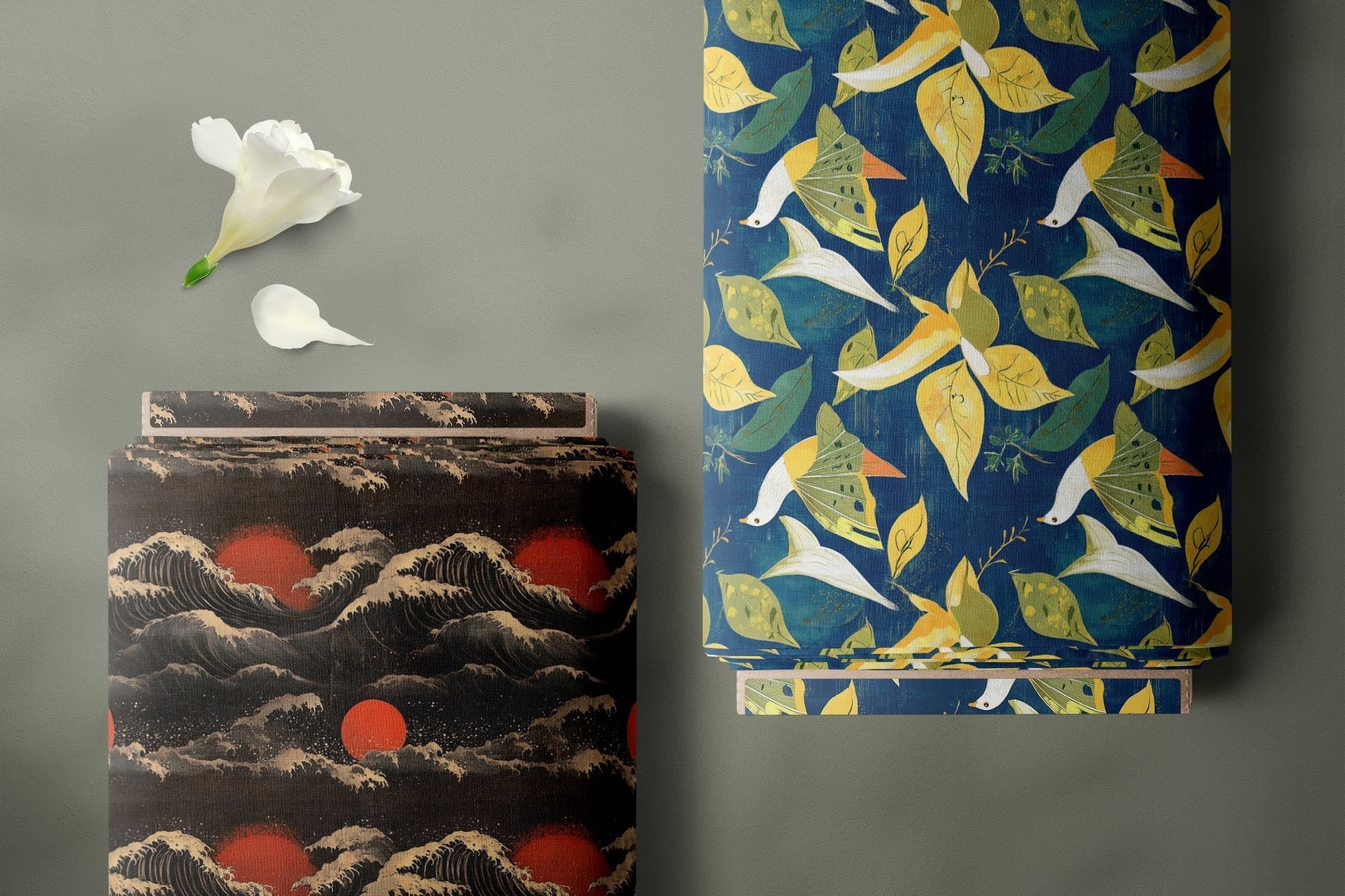
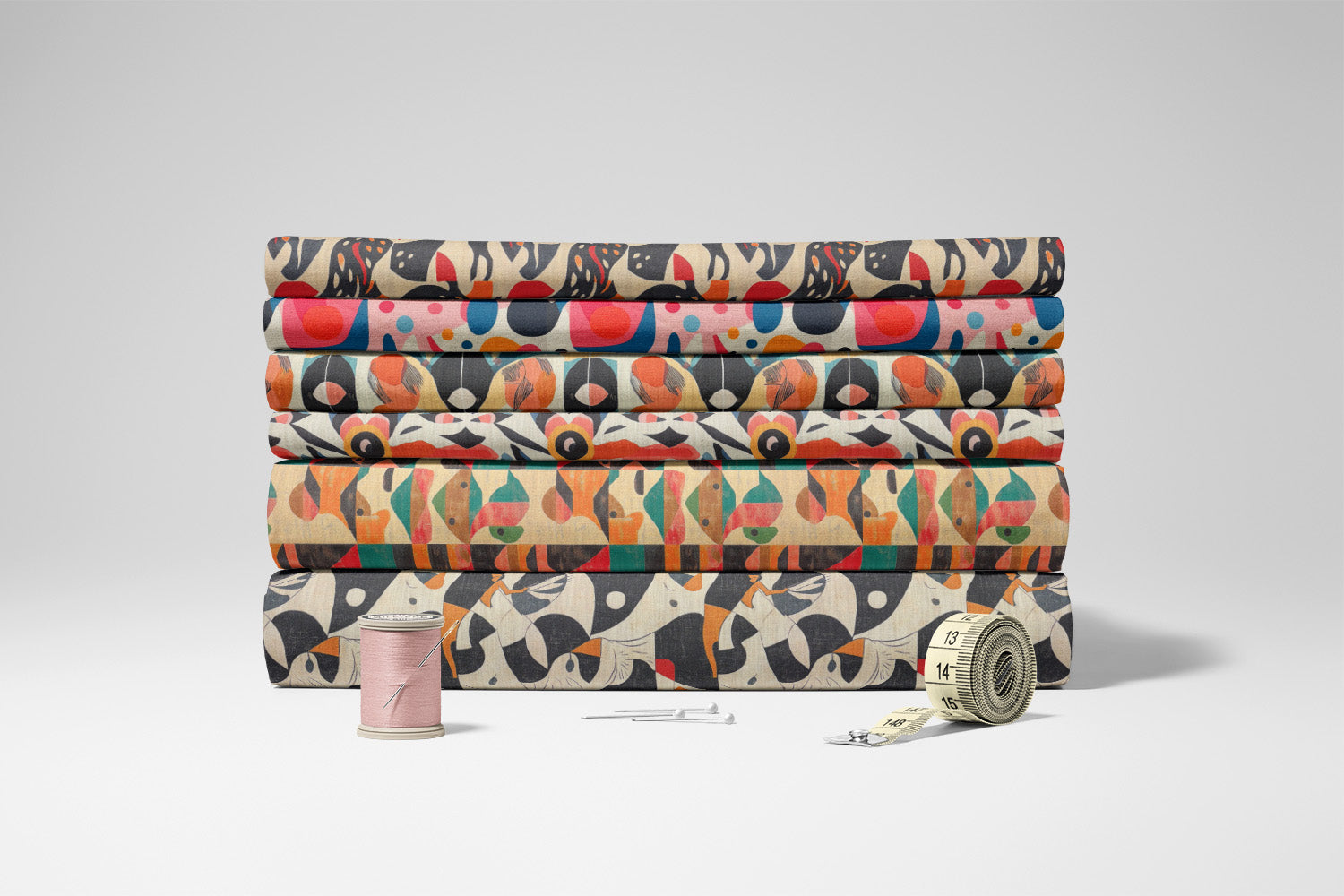
For design-led upholstery, print quality matters. A good patterned fabric should show clear detail, balanced colour and a pattern scale that works on furniture. Large-scale prints can be beautiful on statement chairs, headboards and sofas, while smaller designs can suit dining chairs, cushions and compact upholstery.
If you are comparing printed and woven fabric, read our printed vs woven fabric guide. To explore design-led options, browse abstract upholstery fabric, Kintsu Japanese inspired upholstery fabric or bird upholstery fabric.
6. Practical treatment options
Good upholstery fabric should suit the practical demands of the project. Some pieces may need stain-resistant treatment, especially dining chairs, pale fabrics or family seating. Commercial and hospitality projects may need fire-retardant treatment, including Crib5 depending on the setting.
Check our fabric treatment options and our Crib5 upholstery fabric guide if you are specifying for a commercial or high-use interior.
7. Sample performance in the real room
The final test is the sample. A good upholstery fabric should still look and feel right in your own space, next to your paint colours, flooring, wood tones, curtains and natural light. This is especially important for bold patterns and colours that shift throughout the day.
Before buying metres, compare samples from the luxury designer upholstery fabric collection or browse best-selling upholstery fabrics for a starting point.
Good upholstery fabric FAQs
What is the most important quality in upholstery fabric?
Durability is usually the first practical quality to check, but the best fabric also needs the right composition, texture, colour, pattern scale and care profile for the furniture.
What rub count is good for upholstery?
For everyday seating, a strong rub count is important. Saint & Poet upholstery fabrics are tested to 35,000+ rubs, which gives confidence for busy homes and many commercial interiors.
Does expensive fabric always mean better fabric?
No. Price alone does not prove suitability. A good fabric should have the right specification, handle, durability, design quality and care profile for the project.
How can I tell if a printed fabric is good quality?
Look for clear print detail, balanced colour, a suitable upholstery basecloth, good durability data and a texture that feels appropriate for furniture.
Should good upholstery fabric be treated?
Not always. Treatment depends on the project. Stain resistance can be useful for busy homes, dining chairs or pale fabrics, while fire-retardant treatment may be required for commercial spaces.